
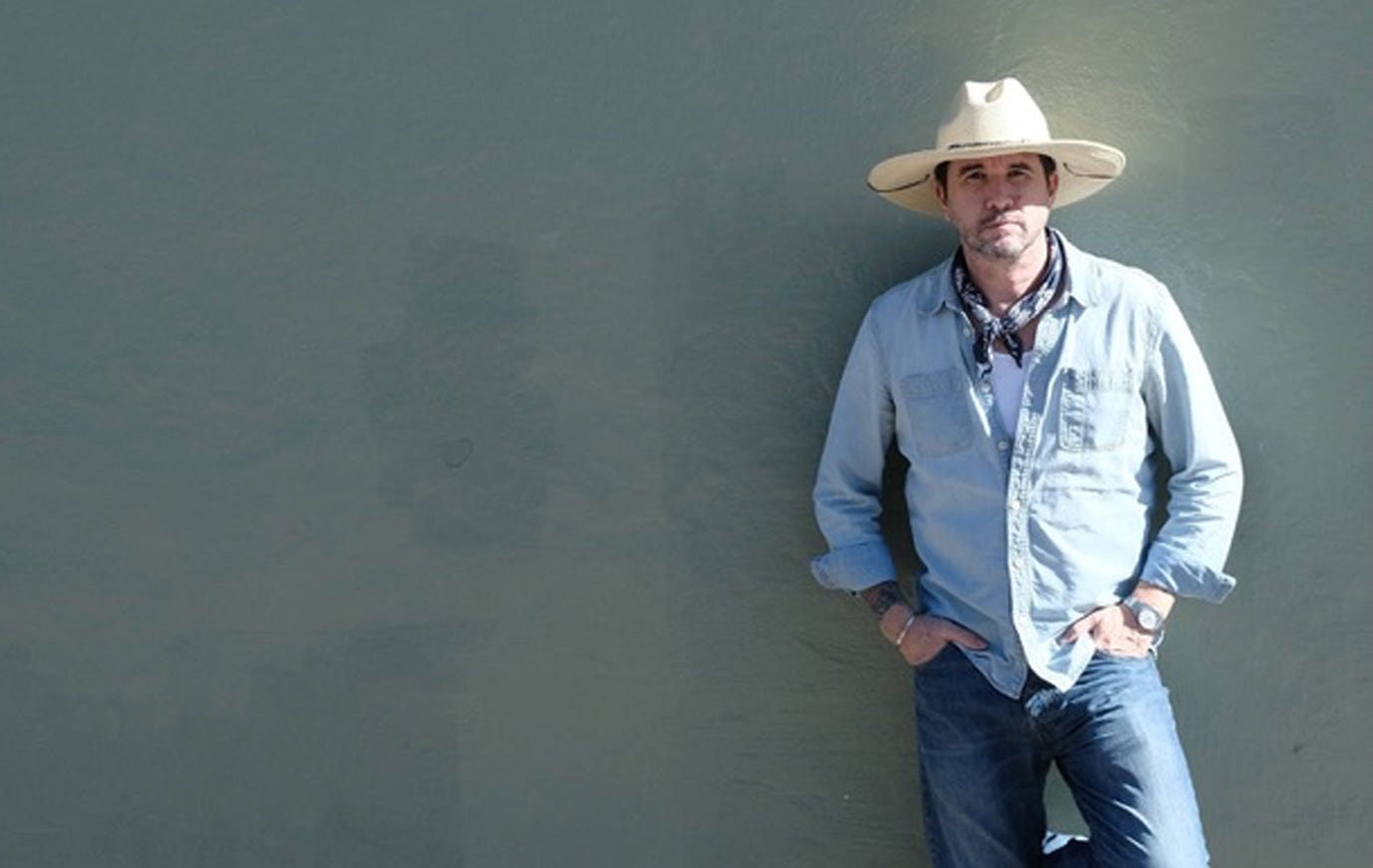
I first watched Justified the week it premiered. I was 45 years old.
I loved Raylan Givens immediately. The hat. The walk. The almost pathological calm. The ability to enter a room containing three armed men and somehow make them feel like they had made a poor career choice.
I loved Boyd Crowder even more. Shakespeare with a southern drawl.
Walton Goggins could turn ordering breakfast into a four-minute meditation on God, capitalism, betrayal and the proper application of high explosives.
The writing was extraordinary. The performances were extraordinary. Harlan County seemed populated entirely by people who could either quote scripture or shoot you, and quite a few who could do both.
I have watched the series three or four times. And apparently, for more than a decade, I missed one of the best lines in it. Or perhaps I heard it. I just wasn’t old enough to understand it.
I’m rewatching Justified again now, and somewhere along the way Raylan Givens says:
“Well, you know what they say. Getting old ain’t for pussies.”
Well, shit. There it was. A sentence that had presumably been sitting in exactly the same place since 2010, patiently waiting for me to catch up with it.
The line hadn’t changed. I had.
There are things you cannot hear yet
This is one of the more peculiar discoveries of getting older. We tend to think of understanding as something that happens more or less immediately. Someone says something. We hear the words. Our brain processes them. Meaning received.
But I’m increasingly convinced that some ideas arrive years before we are capable of understanding them. At 25, someone tells you that time goes quickly. Sure it does, Grandpa.
At 35, someone tells you that careers don’t turn out the way you planned. Maybe yours didn’t.
At 45, Raylan Givens tells you getting old ain’t for pussies. Ha. Great line.
Then you turn 62. And suddenly Raylan isn’t being funny anymore. He’s giving you the weather report. Because by this point, getting older has stopped being an abstract concept involving other people.
It has become personal.
Your knees have opinions. Your metabolism has apparently joined a union. There are increasingly elaborate negotiations involved in getting off the floor. You begin making small involuntary noises while sitting down. You find yourself looking at a staircase and thinking, Do I actually need anything up there?
But the physical stuff is almost the least interesting part of it. Because aging isn’t simply what happens to your body.
It’s what happens to your understanding of the world.
We have the story of aging almost exactly backwards
Our culture has a remarkably impoverished vocabulary for getting older. Decline. Deterioration. Slowing down. Fading.
Losing relevance.
We describe human beings after a certain age almost entirely in terms of what is disappearing. Which is strange when you think about it. Because something else has been accumulating the entire time.
Experience. Context. Pattern recognition. Perspective. Judgment. Stories. Loss. Failure. Recovery. A fairly sophisticated understanding of which things matter and, perhaps more importantly, which things absolutely do not.
None of this is guaranteed, either. Accumulation isn’t automatically wisdom. Some people spend forty years reinforcing the same three mistakes and calling it experience. The stories get better told. That doesn’t make them truer. But the raw material — the judgment calls made and actually lived with — is sitting there in a way it simply isn’t at 27, whatever you end up doing with it.
By 60, you have probably survived several versions of yourself. The ambitious one. The frightened one. The person who desperately wanted a particular job. The person who thought losing that job would be catastrophic. The person who was certain a relationship would last forever. The person who discovered it wouldn’t. The person who thought success would feel different. The person who eventually discovered that almost everybody is improvising. Including the people in charge.
Especially the people in charge.
And yet we look at someone who has navigated five or six decades of this stuff and somehow conclude that the defining characteristic of that person is decline. That is an astonishingly strange interpretation of the evidence.
Beware the old soldier
There is an old saying — I’ve seen versions of it attributed to everyone and no one — that goes something like this:
Beware the old soldier. He is old for a reason.
I love that. Because it contains an entirely different way of thinking about age.
The old soldier isn’t the diminished soldier. He’s the one who figured out how to stay alive. He’s seen the ambush before. He knows which hill isn’t worth dying on. He knows the difference between courage and stupidity, largely because at some point in his life he has probably demonstrated both.
He knows when to advance. He knows when to retreat. And perhaps most importantly, he has learned that there are a surprising number of battles you don’t actually need to fight at all.
His age isn’t evidence of his decline. It’s evidence of his survival. Of course, surviving does not prove the old soldier was always clever. Sometimes he was lucky. Sometimes somebody else took the hit. Age is evidence that a life continued, not proof that every lesson was learned correctly.
There is something almost comical about the way we reverse this logic everywhere else.
The 27-year-old founder sleeps under his desk, nearly bankrupts himself three times and finally builds a successful company. Resilient.
The 57-year-old loses a spouse, gets made redundant, and rebuilds a career inside an industry that no longer resembles the one he trained in. Old.
Something doesn’t quite add up.
We have mistaken evidence of survival for evidence of decline. Getting older means accumulating scars, certainly. But scars are not evidence that something became weaker. They’re evidence that something healed.
The story we tell about aging shapes the way we design companies, careers, products and entire economies. If older people are primarily understood as diminished versions of younger people, then the objective becomes accommodation.
Make the font bigger. Make the button easier to press. Put a smiling silver-haired couple on a beach. Perhaps give them bicycles. Older people fucking love bicycles, according to stock photography.
But what if the underlying assumption is wrong? What if aging isn’t simply subtraction? What if it is also accumulation?
The strange compounding of meaning
Which brings me back to Raylan Givens. Because the thing I find most interesting isn’t that I understand his line differently now. It’s that the line has been sitting there all along.
The variable is me. I brought sixteen additional years to the sentence. Sixteen years of work. Friendships. Mistakes. Losses. Wins that didn’t matter nearly as much as I thought they would. Failures that mattered considerably less than I feared they would. People arriving. People leaving.
It makes me wonder how many other things in my life I have heard but haven’t heard yet. Books. Films. Songs. Advice from my parents. Things friends told me. Things I told myself.
Perhaps meaning has a strange incubation period. Some ideas require a decade before they begin to glow.
Maybe this is what wisdom actually is. Not the thing we reserve for philosophers, grandparents and people photographed in black and white staring thoughtfully through windows, but something less glamorous. Wisdom is simply experience that has finally acquired meaning.
Time does not automatically make us wise. Some people live the same year sixty times. Experience can become perspective, but it can also become habit, caution, resentment, or a collection of stories in which we are always the person who was right. Age supplies the material. Synthesis still requires curiosity.
The lesson arrives long after the event. This might explain why advice is such an inefficient form of human communication. People who have already learned something desperately try to give it to people who haven’t.
Save your money. Don’t worry so much about what people think. Spend more time with your parents. Take the trip. Leave the job. Tell them you love them.
Your children listen politely. Your younger employees nod. Your younger self would have nodded too. And then everybody goes off and learns it themselves.
Because perhaps some knowledge cannot be transferred. It has to be earned.
The second half of life may be doing something entirely different
For most of our lives, we are encouraged to accumulate. Qualifications. Jobs. Money. Houses. Contacts. Followers. Experiences. Passport stamps. Stories.
The assumption is that more life means more material. But I’m beginning to wonder whether something changes somewhere along the way. Perhaps the first half of life is largely about accumulating experiences. And the second half is about discovering what some of them meant.
That isn’t decline. That’s synthesis. And synthesis may be one of the most valuable human capabilities there is. Especially now.
We are entering an era in which machines can retrieve more information than any human could possibly remember. They can summarise it, recombine it, analyse it and increasingly reason across it.
Information itself is becoming cheap. Experience isn’t. Context isn’t. Judgment isn’t.
Perhaps an economy obsessed with youth is about to discover that it has been systematically undervaluing precisely the thing that becomes more valuable as information becomes abundant: perspective.
The old soldier may turn out to be considerably more useful than we thought.
That’s the hopeful version. The uncomfortable one is that institutions don’t correct a mispricing just because someone points it out; they correct it when the cost of ignoring it gets high enough to notice. Nothing says we’re there yet. An economy can undervalue judgment for a very long time before it learns the lesson.
Getting old ain’t for pussies
There are things about aging I could happily do without.
I would like my eyesight back. I’d like my metabolism from 1994. I’d like to stand up from a chair without occasionally sounding like somebody has stepped on a small accordion.
But I don’t want to be 45 again. That’s the surprise. Because the 45-year-old version of me had things I no longer have. But I have things he didn’t.
I know which battles aren’t worth fighting. I know that very few disasters remain disasters forever. I know careers are much longer and stranger than we imagine. I know reinvention is possible because I’ve watched myself do it.
I know some people stay. Some don’t. I know that things are never as good, or as bad, as they might seem in the moment.
And apparently I can now hear dialogue in television shows that has been waiting sixteen years for me.
So Raylan was right. Getting old ain’t for pussies. But perhaps not for the reason I would have imagined when I was 45.
Getting older isn’t difficult simply because things start disappearing. It’s difficult because life keeps asking you to absorb more of it. More contradiction. More uncertainty. More loss. More change. More understanding. And somehow remain curious enough to keep going.
Maybe that’s what I couldn’t hear the first time. Maybe I wasn’t supposed to.
Or maybe I just wasn’t old enough for that sentence yet.
