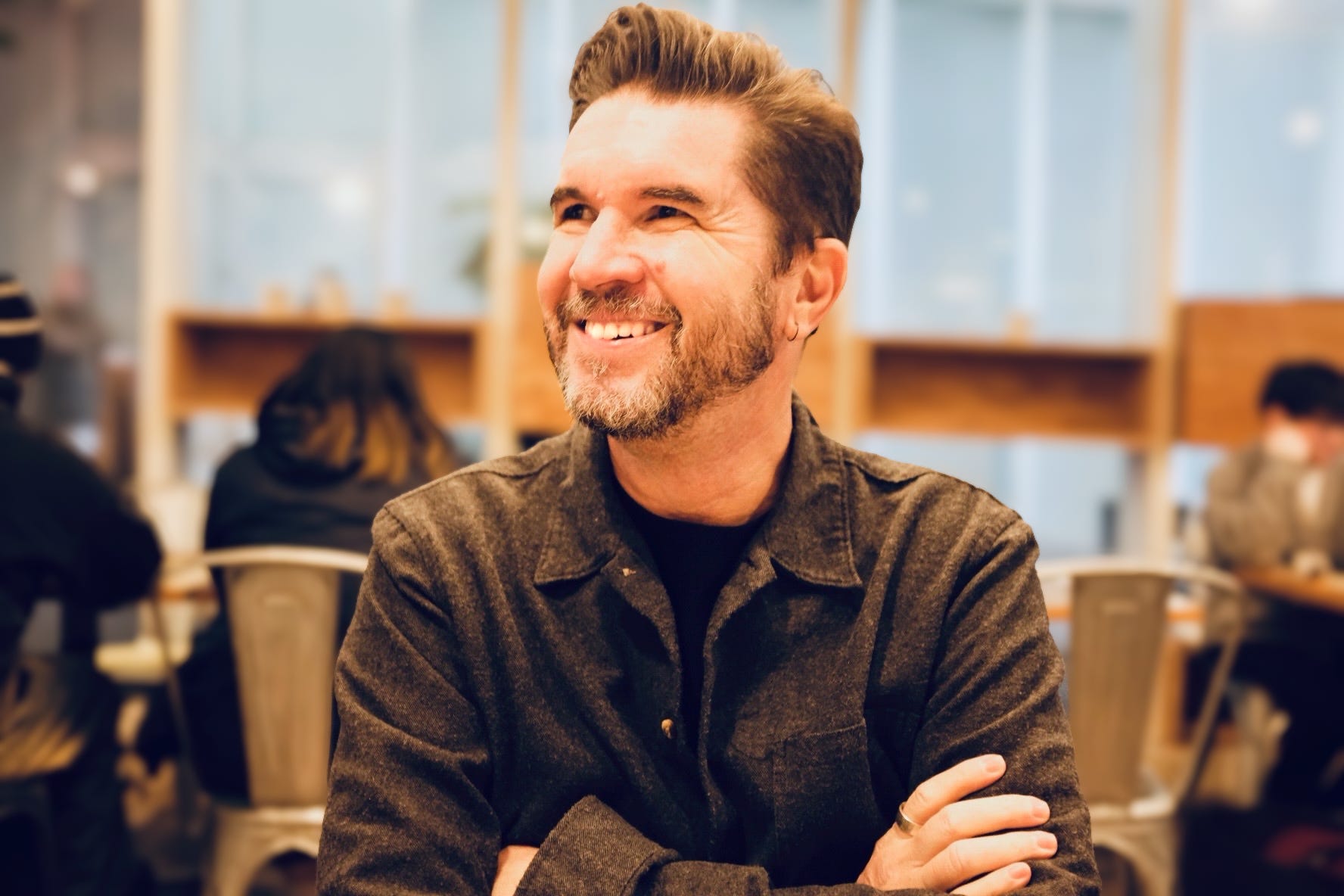
"I focus on making a better product." - Severine Vauleon, during the IAA talk on Sustainability.
On Thursday, I attended the IAA Singapore‘s first session on Sustainability in Advertising. The evening was fantastic! Now, I am not going to recount everything that happened, as others have done a much more thorough job than I could have. Since I’m right-handed, I pretty much kept a glass of wine in my right hand instead of taking notes. But there are some excellent summaries of the event floating around LinkedIn.
The format of the IAA Sessions is a bit different than most events, which I really love. I am not talked to. I am talked with. The first speaker sets up a situation with some facts and figures, aligned with the event theme, then asks a question. The table you are seated at is meant to answer that question or at least discuss its implications. The evening follows this format - multiple speakers, many questions, and a lot of opinions.
Now, glass in hand (my hand, not hers), I listened to Severine Vauleon say what to me was probably the most important thing of the evening, which has not only stuck with me, but has gotten me to think back on all the work I have ever done that circles the space of Sustainability marketing.
“I focus on making the product better.”
You see, the discussion at my table was wandering about the space of how to improve the sustainability marketing efforts for consumers, or at least that was where the initial question was leading us. And of course, I had a very insightful comment about needing to start with culture, while another person said something about training or education, or you know, the things we have said and done for years.
Severine’s comment froze me. It is so apparent, so correct, and yet, I do not remember a single meeting where a leader challenges the team to make the product better so that we won’t need to market its sustainability impact. The product, by way of being better, does the work for you. You can focus your efforts and budgets on marketing the product. The upstream efforts in R&D create a downstream impact on sustainability, not because we have a sharper sustainability marketing angle, but because the product is simply better.
The Genius of This Thinking.
I know it’s only been a few days, but here is where her comments have taken my thinking, and I can not wait to get involved in a sustainability (I mean product improvement) project armed with this POV.
Product Innovation Shifts Sustainability From Message to Substance
We’ve spent years asking how to talk about sustainability - what we can claim, how to dodge greenwashing, how to “educate” customers. Saverin flips the brief: don’t say it, build it in. If the product is genuinely better - leaner bill of materials, longer life, lower energy in use - then sustainability stops being a campaign and starts being a property. Marketing doesn’t need to carry a halo; the experience does. In other words, excellence upstream in design and R&D creates credibility downstream in the market.
If sustainability isn’t in the product, it won’t be in the outcome. And no amount of clever copy is going to change that.
It Collapses the Costly “Trust Gap”
Consumers have grown weary of lofty pledges and fuzzy “eco-friendly” labels. They’ve seen too many brands overpromise and underdeliver. That scepticism creates a trust gap - the distance between what a brand says and what people actually believe.
The only way to close that gap is through the product itself. If packaging is lighter, energy use is lower, or components are designed for a longer life and have a recycling plan for EOL or some form of planned obsolescence, then the consumer experiences the difference firsthand. Proof replaces persuasion. Trust is earned upstream in R&D, not patched together downstream in an ad campaign.
It’s Business-Centric, Not Cause-Centric
Sustainability can often be framed as a trade-off: something you “add on” to appease regulators or conscious consumers. Severin reframed it as a business driver: better products win markets. Better is measurable: cheaper to ship, longer shelf life, lower defect rates, and higher customer loyalty. Sustainability becomes a byproduct of excellence rather than a side hustle.
It Reduces Marketing’s Burden
Marketers often get stuck carrying the weight of sustainability storytelling, crafting narratives for products that weren’t designed with it in mind. Severine’s view makes marketing cleaner and more powerful. If the product is better, marketing can focus on value, performance, and cultural fit. Sustainability becomes implicit rather than an overextended campaign theme.
It Forces Long-Term Thinking
Marketing timelines are often short-term: quarterly campaigns, annual KPIs. R&D is long-term. By making the product better, sustainability is baked in at the design stage, where the most significant environmental impact lies. You solve the problem at its root rather than decorating symptoms with messaging.
It Cuts Through the Noise
Everyone is saying the same things about sustainability. Few are showing it. “I just make a better product” is disarmingly simple but cuts through years of jargon. It resonates because it bypasses moral lectures and marketing fluff, grounding sustainability in innovation and utility.
A Room Full of Provocations
Of course, Severine wasn’t the only voice I remembered that night. A few other comments stuck with me:
Howie Lau How Sin 刘浩新 reminded us that what we put into the market doesn’t just reflect our culture, it directs it. Marketers are not just storytellers, they are culture shapers who wield the power and the responsibility to influence the sustainability agenda.
Richard Bleasdale ‘s comparison of the advertising burden on global emissions has also stuck. Digital advertising accounts for 2% of Global emissions, the same as the entire airline industry. So much effort has gone into things like travel carbon offsets for airlines, but where is that visibility for our industry? There are ways to measure, to track, and to reduce the impact of digital emissions. Still, based on the reaction in the room, so many marketers are unaware of the metrics or how they actually have the ability to choose their programmatic suppliers based on impact, waste, and a more sustainable distribution approach.
Andy Wilson , who was also seated at my table, brought up a rather interesting point. Often, the real change agents will not be at the marketing table. This echoes a firm belief that I hold – we need to remember that we are not marketing to ourselves or our company. We are marketing to consumers, and they need to have some representation in these discussions. The 5-person sustainable marketing team is unlikely to make a significant impact on the sustainability challenge. However, suppose a 5-person sustainability marketing team understood the behaviors of product consumers. In that case, they might be able to unlock what is meaningful and actionable, be it in product packaging insights, product design for longevity, or even something as simple as rethinking refill sizes to match daily habits. In other words, marketing teams could stop acting as translators of sustainability jargon and start serving as insight engines for product innovation, feeding R&D with lived behaviors that make “better” both practical and scalable.
Taken together, the message was loud and clear: stop marketing “sustainable products.” Instead, focus on creating better products, reducing hidden waste, selecting better partners, and inviting new voices to the table. In short, make sustainability the consequence of better decisions, not the campaign that tries to cover for worse ones.
From Conversation to Accountability
I am incredibly proud to be not just a member of the IAA Singapore, but also honoured to sit on one of its advisory boards. As we wrap up Year 1, I’m excited to see the areas of impact that the various advisory boards have been working on, along with the truly remarkable voices and opinions that emerge during the sessions, as we look forward to Year 2. Congratulations to everyone involved in the first Sustainability session.
As a reminder to the Sustainability Advisory Board, I had asked Richard Bleasdale to explore a way to make the emissions data publicly available for our region. We talk about measuring what matters in advertising. Well, this matters. It’s one thing to name the problem, but unless we make that problem and the rate of change (both good or bad) more visible, we will only be accountable annually, via some report. And that is just not enough.
Sustainability in marketing is not a story problem; it’s a product problem. It’s not about what we promise, but what we choose to design, distribute, and endorse. The next time your team is drafting a “sustainability campaign,” pause and ask the more complex question:
Are we making the product better, or just the story better?
Join the Discussions That Matter
What struck me most that evening wasn’t just Severine’s line, or Richard’s stat, or Andy’s reminder. It was the power of putting these voices together in one room. That’s the genius of the IAA format: it doesn’t just inform, it sparks. One glass of wine (ok, maybe two…), many table discussions, and a room full of great insights that can reframe how we think about sustainability and marketing.
If you are interested in shaping where this industry goes next, during a time when there are incredible transformation occurring in our industry, then join the discussions that matter. Join IAA Singapore


