
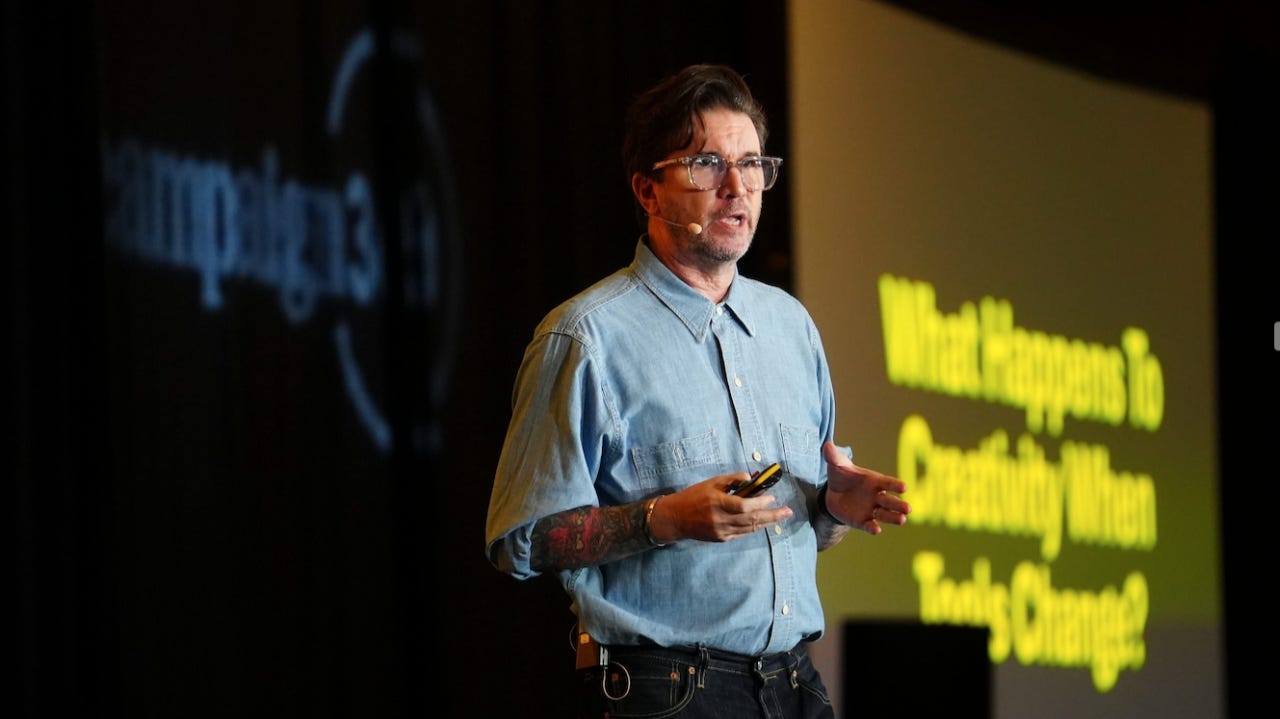
A note of thanks. I was invited to speak at Campaign360 on the main stage, in front of an audience of some of the region’s most senior creative and marketing minds. That invitation meant something. Not just as a professional recognition, but as a signal that the questions I’ve been asking, quietly, sometimes inconveniently, belong in the larger conversation. To the team at Campaign360, esp Jenn See: thank you for the platform, and for trusting that what I had to say was worth the room’s time.
Yesterday, I walked onto one of the biggest stages I’ve ever stood on, inside a massive ballroom at Marina Bay Sands, carrying the simplest presentation I have ever designed.
Twenty slides. Twenty minutes. One word per slide, sometimes. Some slides completely blank.
No motion graphics. No generated imagery. No cinematic soundtrack swelling behind key points. No visual spectacle of any kind. In a conference overflowing with stimulation — screens everywhere, data everywhere, confidence everywhere — I brought almost nothing.
Just me. A microphone. And a lot of silence. Afterward, someone told me the talk felt like jazz.
I’ve been thinking about that comment ever since. Not because it was flattering — though it was — but because of what it might actually mean. Jazz isn’t about filling every available space. Jazz is about knowing which notes not to play. The silence is part of the composition. The tension between what’s there and what’s absent is where the music lives.
And I think that’s exactly where creativity lives right now, too.
The Talk I Didn’t Give
I started preparing this presentation almost two months ago. The original idea was fairly conventional — collect examples of AI-generated work. Interesting ads. Unexpected films. Images that made you look twice. Work that made an audience genuinely ask: Is this really creative?
At first, that felt like enough for a conference talk.
Then the models improved. Every few weeks, the outputs improved. The orchestration tools improved. The realism improved. The motion improved. The voices improved. And every time I returned to the deck, the previous examples had already aged. Not broken. Not terrible. Just quietly, relentlessly outdated.
That pattern started bothering me.
Because the outputs were improving. That was undeniable. But I kept asking myself whether that was the same thing as creativity improving. And the more honestly I sat with that question, the more I suspected I’d been asking the wrong question entirely.
Maybe the question was never: Is this really creative? Maybe the real question is:
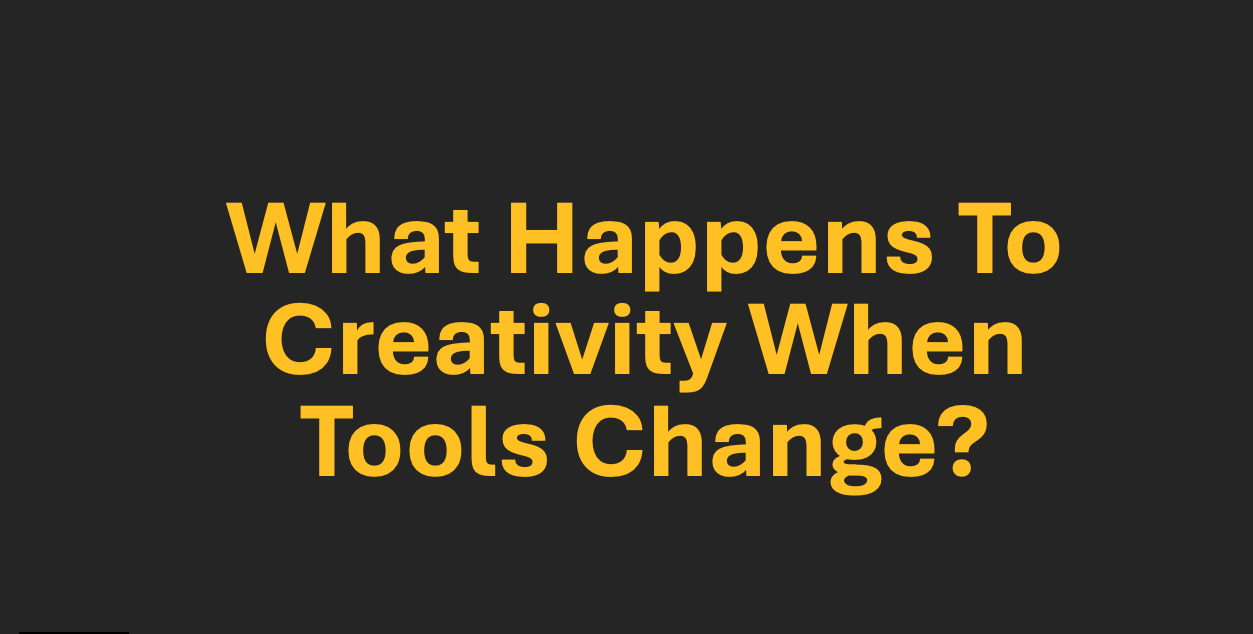
Those are not the same question. And the difference between them is everything.
We’ve Been Here Before
I’m 62. I’ve watched every so-called creative crisis of the last four decades from the inside.
When I was twenty, the Mac transformed desktop publishing. Tools that once belonged to specialists — kerning, typesetting, layout — became suddenly, shockingly accessible. Then Photoshop arrived while I was in design school and changed image manipulation forever. ProTools challenged what it meant to “be a musician.” Auto-Tune democratized singing itself, a gift that remains the most contested in pop culture history. The iPhone became a complete creative studio in your pocket. Instagram made life performative. YouTube turned everyone into a broadcaster.
And now: Midjourney. ChatGPT. Veo. Seedance. Sora. And this week, Omni again changed the tools of creative execution.
What’s remarkable, and I mean genuinely remarkable, not rhetorically, is that every single one of these moments arrived with the same prediction.
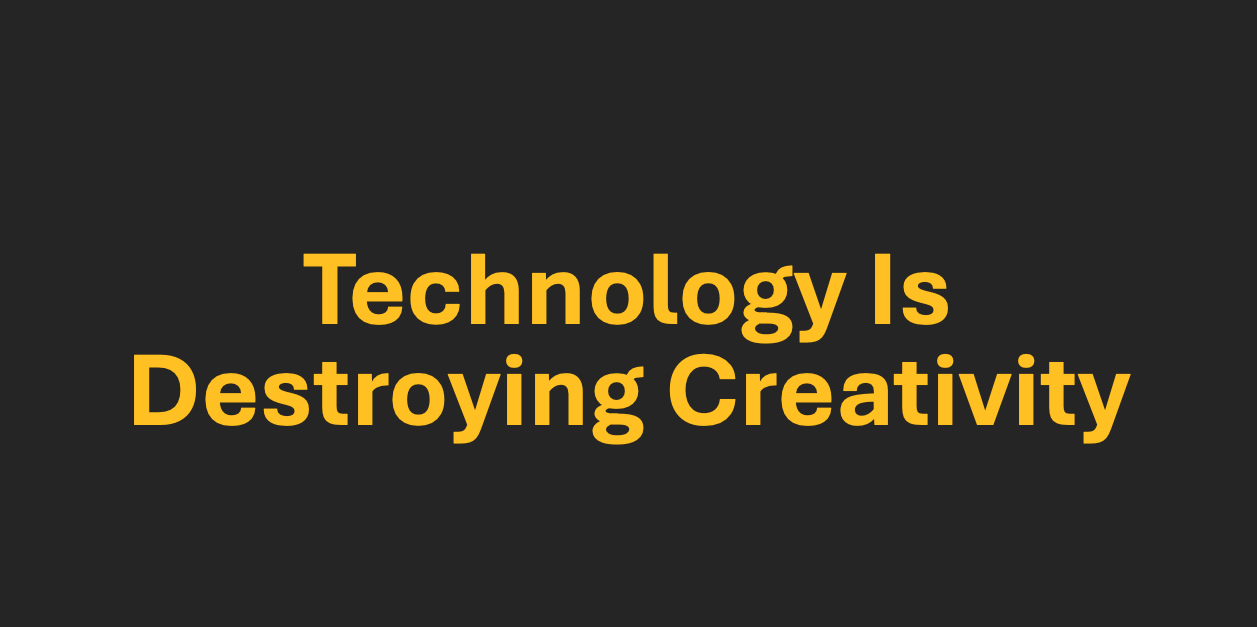
Photography threatened painting. Sampling threatened music. Photoshop threatened photography. Digital filmmaking transformed who was allowed to make films.
Every time, the fear sounded identical.
The tools are making the work easier. Less authentic. Less real. Less creative.
And every time, the fear was wrong. Not because the tools didn’t change things — they changed everything. But because creativity didn’t disappear. It relocated.
The Difficulty Trap
Here’s what I think actually happened in all those moments — and what’s happening again now.
For a very long time, creativity was inseparable from technical mastery. To make a film, you needed cameras, crews, editing systems, and distribution infrastructure. To make music, you needed studios, engineers, expensive equipment, and access. To manipulate images, you needed highly specialized technical skills and tools that most people couldn’t afford or learn.
Making things was difficult. And slowly, almost invisibly, the difficulty itself started to feel like proof of creativity.
So when tools reduce friction, people assume creativity is being diminished. Because we confused creativity with the difficulty of execution. Those things are not the same. They never were.
Photography didn’t eliminate artistic vision — it shifted value toward composition, storytelling, and perspective. Sampling didn’t kill music — it created entirely new forms of reinterpretation, remix culture, and layered creative thinking. Nonlinear editing transformed the rhythm and language of storytelling itself. Digital filmmaking expanded who got to participate.
What changed wasn’t whether creativity existed. What changed was where we recognized it.
But here’s where this moment is genuinely different from all the others. And I want to be precise about this, because the distinction matters. Previous technologies transformed parts of the creative process. AI may be the first tool that dramatically collapses the distance between imagination and manifestation. Not completely. But profoundly enough that the rules are changing.
Ideas that once required teams, budgets, years of training, or highly specialized executional skill can now appear almost instantly. We are no longer talking about better tools. We are talking about what happens when manifestation itself becomes abundant.
Images. Motion. Voices. Music. Campaign concepts. Entire worlds.
And I don’t think we’ve begun to reckon with what happens culturally when that distance collapses this quickly.
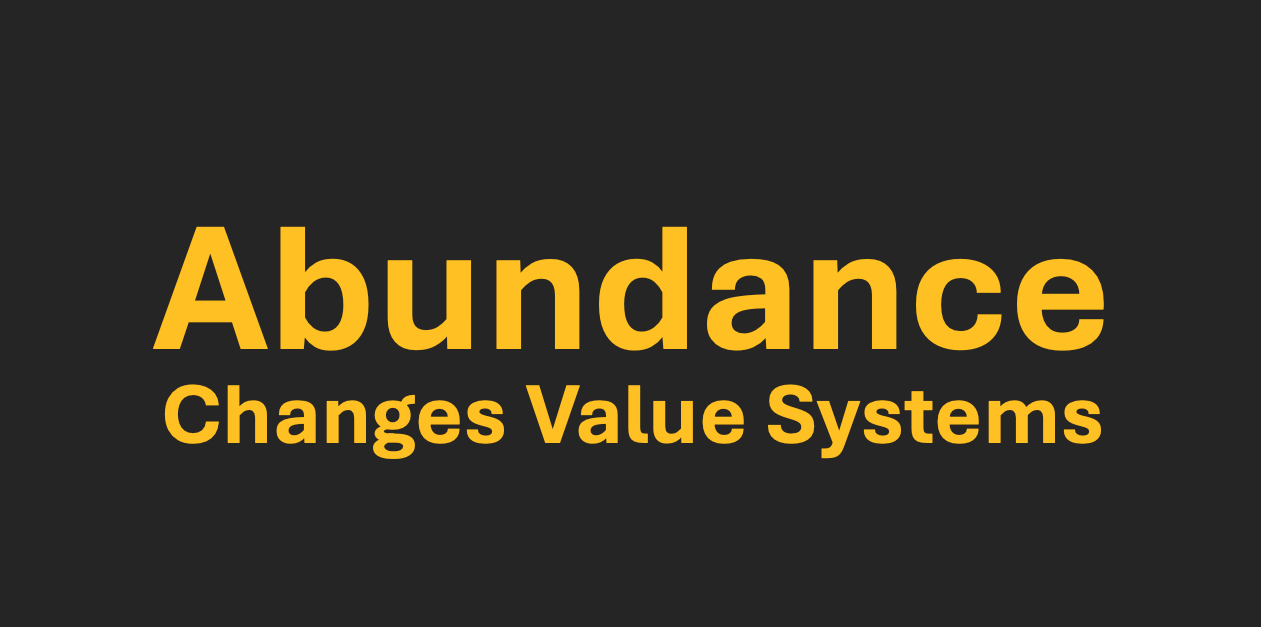
Abundance Changes Everything
For most of modern creative history, execution was the hurdle most people couldn’t cross. Difficulty shaped how we valued creative work. Who could make mattered. Who had access mattered. Who had training mattered. Who had tools mattered.
Difficulty created hierarchy. Hierarchy shaped cultural value. That’s not cynicism — that’s just how it worked. But what happens when generation becomes abundant?
Because abundance always changes value systems. Water is abundant, so we don’t pay much attention to individual drops. Diamonds are scarce — or engineered to appear scarce — so we assign them extraordinary value. The economics of creative work are not immune to this logic.
What many people in this industry are experiencing right now isn’t simply technological disruption. It’s identity disruption. Many of the signals we once used to identify creative value — speed, polish, technical execution, production capability, visual sophistication — are no longer rare. And when those signals change, people begin questioning where creativity still lives.
That’s uncomfortable. Especially for industries and individuals who built entire careers and identities around mastering those forms of execution. I understand that feeling. I’ve built my career inside creative industries for forty years. I feel the gravity of this moment.
But I don’t think creativity is disappearing. I think it’s relocating. Again.
Where Value Goes Next
If execution becomes abundant, value moves somewhere else. Toward judgment. Taste. Perspective. Emotional truth. Restraint. Cultural intuition. Intentionality. Toward recognizing what is actually worth making in the first place.
Because if generation becomes easy, the premium shifts. Not toward who can make the most. But toward who can mean the most. And this is where the conversation becomes much larger than AI.
We are entering a world where content may become effectively infinite. Infinite images. Infinite clips. Infinite campaigns. Infinite variations of those campaigns. I say this with genuine awe, not sarcasm. That is extraordinary.
But abundance doesn’t automatically create significance. Human attention is still earned. Human emotion is still earned. And meaning still has to be felt.
The things that stay with us were never simply technically impressive. They reflected something human back at us. A truth. A tension. A vulnerability. A perspective. A feeling we recognized in ourselves but hadn’t quite found the words for yet.
Think about the work that remains culturally meaningful over time. It’s almost never the most polished. It’s the work that made us feel seen. Understood. Moved. The work that caught us off guard and left something behind.
In a world where almost anything can now be generated, the human layer is what gives the work its gravity.
Not louder. Heavier.
The kind that makes someone stop scrolling for half a second longer than they intended to. The kind that lingers after the screen goes dark. The kind that makes another human being feel slightly less alone.
The Constant
So maybe the future of intelligent marketing isn’t only about systems becoming more intelligent. Maybe it’s about humans becoming more intentional.
The tools change. The friction changes. The process changes. But humans continue to search for meaning in the things we create. And humans still decide what matters. What resonates. What feels true. What deserves attention. That responsibility becomes more important — not less — as the tools become more powerful.
Here’s what I’ve come to believe, after two months of rethinking this talk and forty years of watching tools transform creative industries:
Technology will always change the way we create. But it won’t answer why we create. And that gap — between the how and the why — is exactly where the work that matters still gets made.
Creativity has never only been about what we can make. It has always been about what we choose to say, why we choose to say it, and whether it connects to something meaningfully human on the other side.
That was true before the Mac. Before Photoshop. Before Auto-Tune. Before the iPhone. And it’s still true now.
Maybe that’s the constant underneath all of this. Not the platforms. Not the models. Not the tools. The constant is the human need to say something that matters to another human being.
That’s what the blank slides were for. That’s what the long pause was for. In a noisy room, at the velocity of AI, I wanted people to stop and feel it. To think about it for more than a moment.
If you were in the room, thank you for being there.
If my thoughts are something that is lingering with you, lets have a coffee, and see how we might continue the conversation, as a chat, a project, or maybe, just maybe, an entirely new way of thinking about the work you and your organization do.
I am easy to find.
